
TL;DR
Artificial turf can get warmer than grass in direct sun, but the extreme heat of older products came from dark fibers and rubber infill — problems modern turf has engineered out. Capitol Turf Pros’ heat-resistant turf uses cooling polymers that diffuse heat (withstanding temperatures over 200°F), paired with silica sand infill and smart design to keep Mid-Atlantic lawns comfortable all summer.
Artificial turf has come a long, long way in recent years, but one concern continues to surface during the hottest months of the year: does artificial turf get hot in the summer?
It’s a fair question, and it deserves a straight answer: yes, artificial turf in direct sunlight can get warmer than natural grass. Living grass cools itself through moisture evaporation; synthetic fibers don’t.
But that’s only half the story. Turf technology has changed dramatically, and the heat problems that defined older products have largely been engineered out of modern systems.
For homeowners in Maryland, Washington, DC, and Northern Virginia — where July and August bring the heat — understanding that difference is the key to choosing a system the whole family can enjoy all summer.
Putting Heat in Perspective
One of the biggest misconceptions about artificial turf is that it's uniquely hot. In reality, every outdoor surface absorbs heat in direct sun—concrete patios, asphalt driveways, stone walkways, composite decking, even natural grass to a degree. In fact, reflected sunlight from pavement and pool decks often makes surrounding surfaces hotter than the synthetic turf itself.
So, the real conversation isn’t whether turf gets warm. It’s how modern turf systems manage heat, how today’s products compare to the older turf that initiated that bad reputation, and what design choices can improve comfort even further.
Why Older Turf Got So Hot
The “too hot to touch” stories most people have heard come from a specific generation of products.
Early artificial turf was built with dark, dense fibers and black crumb rubber infill — two materials that absorb and hold heat exceptionally well.
Crumb rubber, in particular, acted like a heat sink — soaking up solar radiation all day and releasing it back through the afternoon.
That generation of turf is where the reputation comes from. It’s also a generation that quality installers have left in the dust.
How Heat-Resistant Turf Stays Cooler
Today’s heat-resistant turf attacks the problem from several directions at once.
- * Cooling polymers. Capitol Turf Pros’ heat-resistant turf is engineered with advanced cooling polymers inside the grass blades that diffuse and dissipate concentrated heat rather than letting it build up. The turf still looks richly green, but heat disperses through the blades instead of concentrating at the surface. These systems are built to withstand temperatures exceeding 200°F without fading, withering or losing blade integrity, even alongside heat-reflecting pool decks and dark pavement.
- * Smarter infill. Infill choice is a major factor in surface temperature. Capitol Turf Pros uses silica sand infill rather than crumb rubber. Sand absorbs and releases heat far more moderately, keeping surfaces noticeably cooler while also providing a stable, durable foundation.
- * A well-built base. Turf installed over a packed stone base with a full drainage system performs consistently in all conditions — and because the turf is permeable, a quick rinse drains through and dries fast, which matters on the hottest days (more on that below).
The goal isn’t to eliminate heat entirely — no outdoor surface can claim to do that — but to keep the lawn within a comfortable, usable range through a typical Mid-Atlantic summer.
Design Matters as Much as Material
One advantage of working with a professional installer is that heat management can be built into the design itself, not just the product.
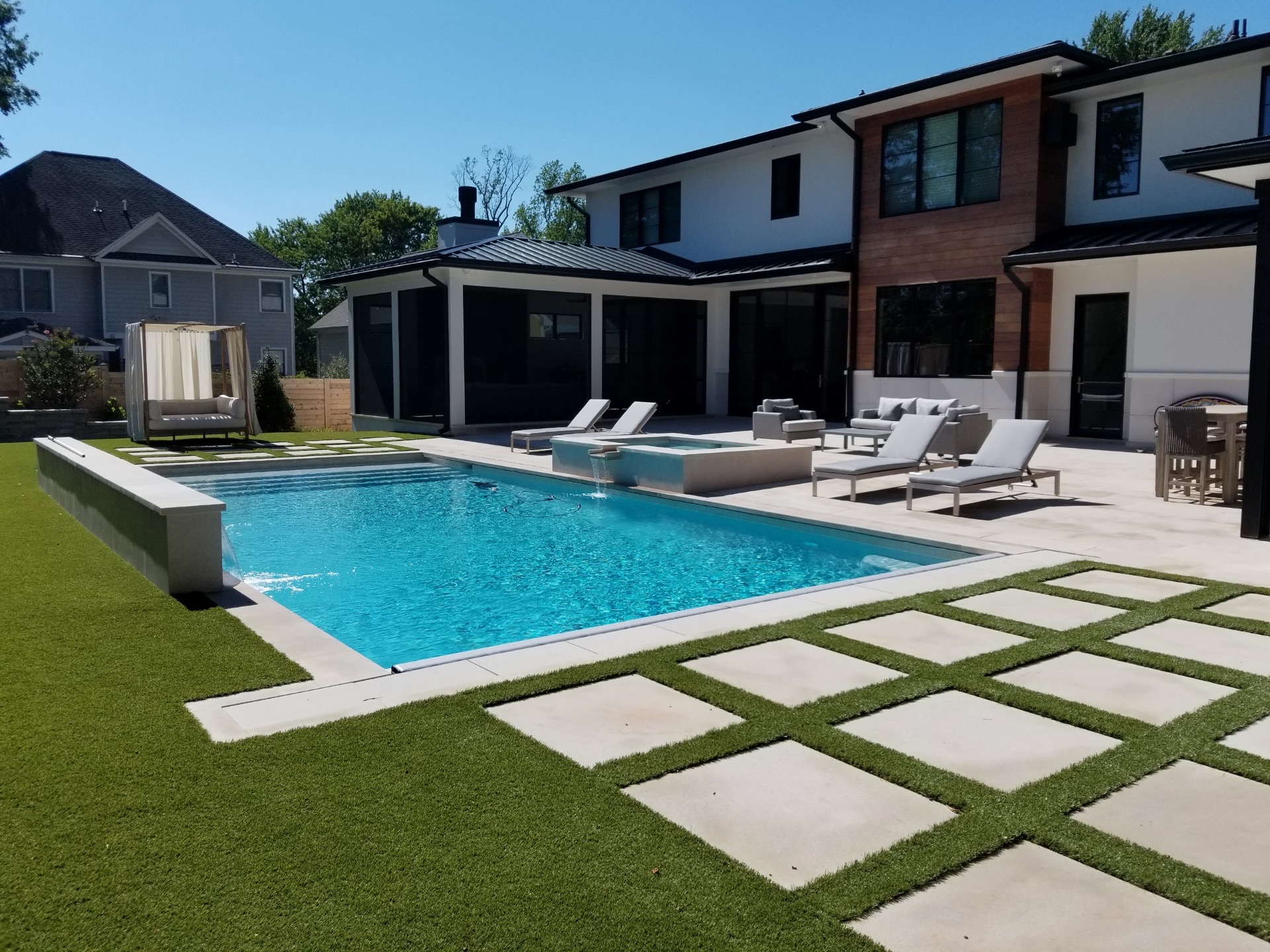
Depending on how a space will be used, homeowners may choose to incorporate shade structures or pergolas over high-traffic areas, strategic tree placement for natural afternoon cooling, or mixed hardscape and turf zones that break up sun exposure.
Capitol Turf Pros creates customizable designs based on how each homeowner plans to use the area — whether it’s a pet run, putting green, playground, or entertainment space.
A play area that gets full afternoon sun calls for different planning than a shaded side yard, and that’s exactly the kind of decision an experienced installer helps you get right.
Simple Ways to Keep Turf Cooler
For maximum comfort during peak summer afternoons, a few easy habits make a significant difference:
- * Rinse before use. A quick spray from the hose drops the surface temperature within minutes. The cooling is temporary — as the water evaporates, the surface warms back up — so timing is important before kids or pets head out. Permeable turf drains quickly with no soggy aftermath.
- * Add shade where it counts. Even a small shade sail over a play area keeps turf close to ambient temperature.
- * Time barefoot use. During genuine heat waves, mornings and evenings are the most comfortable—just as they are on a deck or patio.
These are minor adjustments, not lifestyle changes. And it’s worth remembering what you’re not dealing with: no mowing in 95-degree heat, no watering schedule, no brown August lawn, and no mud after summer thunderstorms.
A Better Balance Than Alternatives
When comparing outdoor surfaces, homeowners often find that modern artificial turf offers a better mix of comfort and usability than mud-prone natural grass, hard concrete, or dark asphalt. A surface that stays dry after rain, drains quickly, and stays green through drought is usable far more days of the year—even accounting for a few hot afternoons.
Why Capitol Turf Pros?
Heat performance comes down to product selection and system design — and that’s where an experienced installer earns their keep. Capitol Turf Pros pairs heat-resistant turf built with cooling polymers and No Fade technology, silica sand infill, and a properly prepared, well-draining base with custom design tailored to each property throughout Maryland, Washington, DC, and Northern Virginia.
Interested in a turf system designed for Mid-Atlantic summers? Contact Capitol Turf Pros to explore heat-resistant options for your property.
***
FAQ
Does artificial turf get hotter than grass?
In direct sunlight, yes — turf can run warmer than natural grass. Heat-resistant turf with cooling polymers and sand infill narrows that gap considerably, keeping surfaces comfortable for typical use.
What is heat-resistant turf?
Heat-resistant turf uses advanced cooling polymers within the grass blades that diffuse concentrated heat instead of letting it build up, and it’s engineered to keep its color and blade integrity even above 200°F.
Is heat-resistant turf safe for kids and pets?
You bet. Capitol Turf Pros offers options suitable for both kids and pets, while being designed to maintain performance and comfort throughout the seasons.
Can artificial turf be cooled down quickly?
Yes. A brief rinse with the hose lowers surface temperature within minutes. The effect is temporary, so it works best right before use. For lasting comfort during peak sun, shade structures over high-use areas make the biggest difference.
Does crumb rubber infill make turf hotter?
It contributes — rubber absorbs and radiates heat — though research shows fiber technology plays a bigger role in surface temperature. Capitol Turf Pros uses silica sand infill, which runs more moderate and avoids the chemical concerns associated with crumb rubber.
Does Capitol Turf Pros offer heat-resistant turf?
Yes. Heat-resistant turf is one of Capitol Turf Pros’ core advantages, designed for Mid-Atlantic summers and paired with custom design and professional installation.
***
Get In Touch Request A Quote
Transform Your Space with Premium Synthetic Turf! Get Your Customized Quote Today – Contact Capitol Turf Pros at 301-482-1126 or Complete this Online Form for Expert Installation in MD, DC & VA!
"*" indicates required fields